
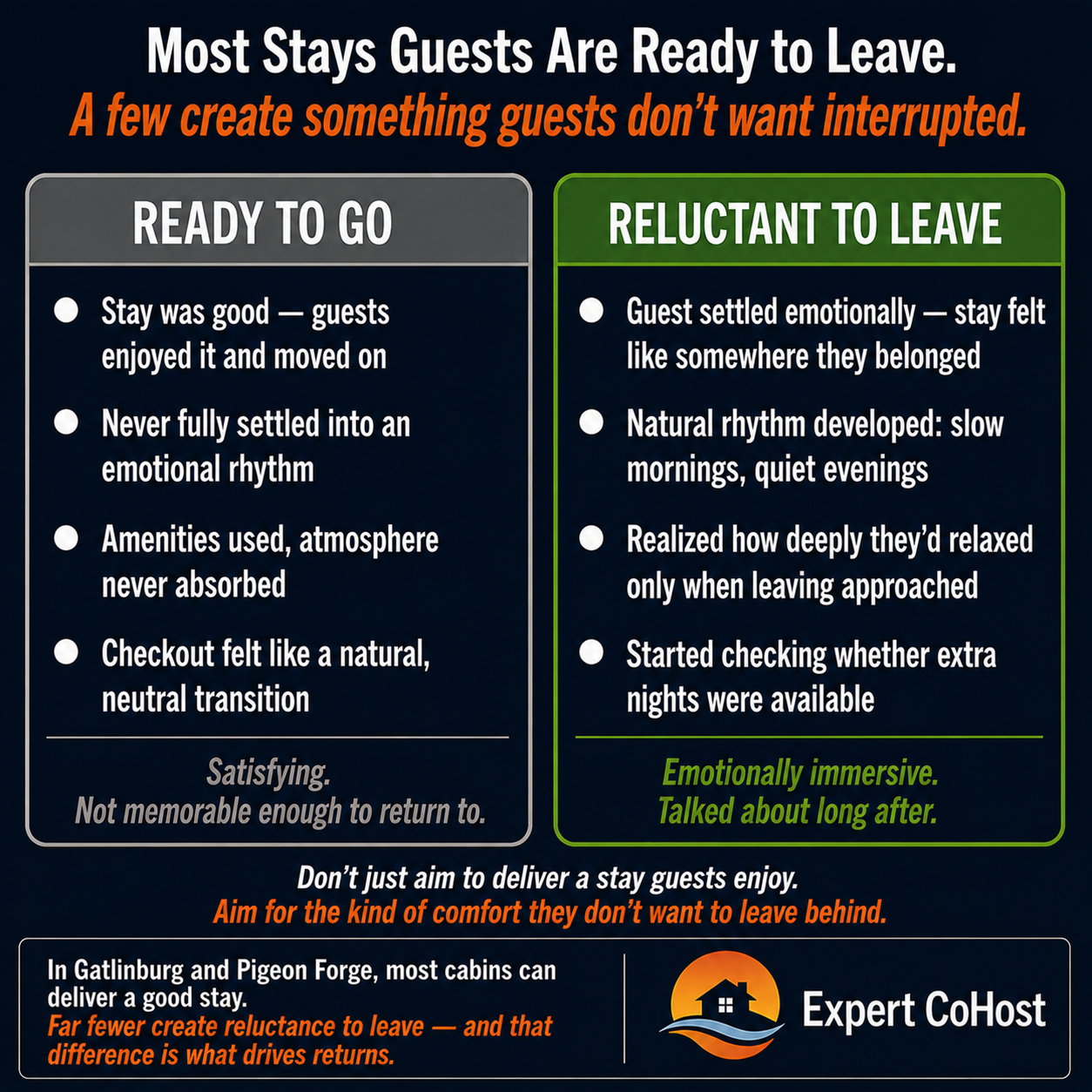
Some Airbnb stays create an unexpected feeling near the end of the trip.
Guests begin realizing they don’t actually want to leave yet.
They may even start:
- checking whether extra nights are available
- talking about returning in the future
- slowing down before checkout
- emotionally resisting the transition back to normal life
That reaction is incredibly valuable.
Because it signals something deeper than satisfaction.
It signals emotional attachment to the experience itself.
Most Stays Are Temporary — Some Feel Immersive
Many short-term rentals function exactly as expected.
Guests sleep there.
Use the amenities.
Enjoy the trip.
Then move on.
But certain stays create something more immersive.
Guests emotionally settle into the environment.
The property begins feeling:
- calming
- restorative
- emotionally easy to exist inside
And once that emotional comfort develops, leaving starts feeling psychologically harder.
Emotional Ease Makes Time Feel Different
One reason guests wish they booked longer is because emotionally comfortable stays change how time feels.
Guests stop mentally counting:
- schedules
- tasks
- transitions
- logistics
The experience becomes emotionally slower.
More grounded.
Less mentally demanding.
That emotional slowdown creates deeper relaxation than many guests experience in daily life.
Guests Become Attached to the Atmosphere
Interestingly, guests rarely become attached to amenities alone.
They become attached to atmosphere.
Things like:
- peaceful mornings
- quiet evenings
- natural routines inside the space
- emotional comfort during downtime
begin shaping the emotional identity of the trip itself.
The stay stops feeling like temporary accommodation.
It starts feeling like a place the guest emotionally inhabits.
Strong Hospitality Reduces Emotional Resistance
Travel naturally creates low-level tension.
Guests constantly adapt to:
- unfamiliar spaces
- schedules
- environments
- routines
But exceptional stays reduce that emotional resistance quickly.
The property feels:
- intuitive
- emotionally safe
- mentally easy
- calming to exist inside
That ease allows guests to emotionally settle much deeper into the experience.
The Best Stays Create Emotional Rhythm
Memorable stays often create a natural emotional rhythm.
Guests quickly settle into:
- morning routines
- evening habits
- relaxed pacing
- emotional familiarity with the environment
The stay begins feeling less like a short visit…
and more like temporary belonging.
That emotional rhythm is difficult to create — but powerful when it happens.
Guests Often Realize the Value Late
Interestingly, guests frequently recognize exceptional stays near the end of the trip rather than the beginning.
Only after emotionally settling in do they realize:
- how relaxed they became
- how comfortable the environment felt
- how mentally quiet the experience was
That delayed realization often creates the feeling:
“We should’ve stayed longer.”
Emotional Comfort Creates Long-Term Memory
Stays that guests wish lasted longer tend to remain emotionally memorable long after checkout.
Guests remember:
- how the property made them feel
- how emotionally restorative the experience became
- how easily they settled into the environment
That emotional memory strongly influences:
- repeat bookings
- recommendations
- review enthusiasm
- long-term perceived value
far more than many hosts realize.
Luxury Alone Does Not Create This Feeling
Interestingly, guests do not only feel this way in ultra-luxury properties.
Many emotionally memorable stays are relatively simple.
What matters more is:
- emotional atmosphere
- comfort
- ease
- calmness
- intentional hospitality
Guests become attached to how the stay emotionally supports them — not just how impressive it appears.
The Real Shift
Most hosts focus heavily on creating stays guests enjoy.
But the most emotionally successful properties often create something deeper than enjoyment alone.
They create reluctance to leave.
Because the Airbnb stays guests wish they had booked longer are usually not the ones with the most features.
They’re the ones where guests quietly began building emotional comfort they didn’t want interrupted when the trip ended.