
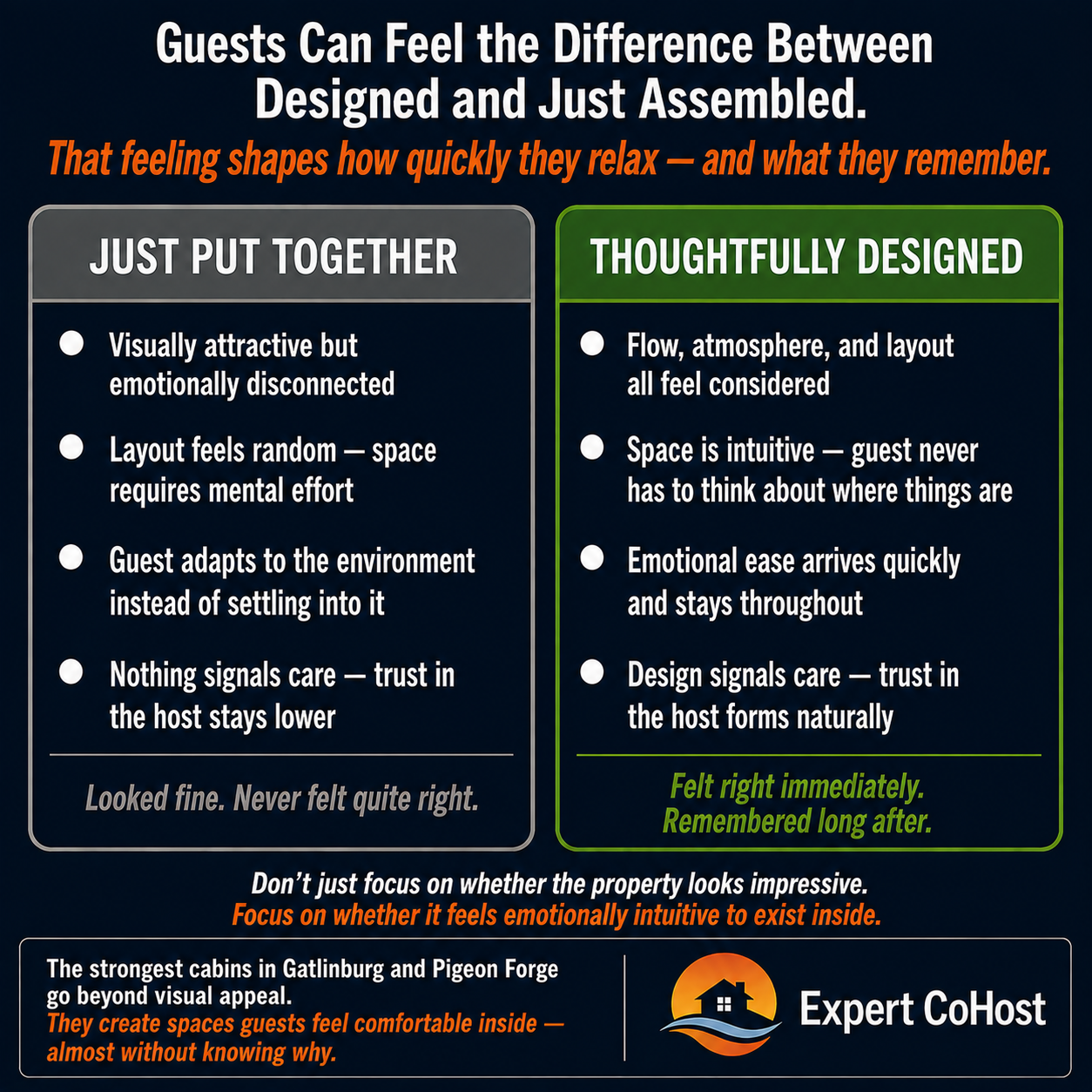
Guests can usually feel the difference between a property that was thoughtfully designed…
and one that was simply put together.
Even when both listings appear visually attractive.
Some stays feel:
- intentional
- emotionally cohesive
- calming
- easy to exist inside
Others feel:
- random
- overly functional
- emotionally disconnected
- assembled without a clear experience in mind
That distinction strongly shapes how guests experience the stay.
Thoughtful Design Is About More Than Appearance
Many hosts associate design primarily with aesthetics.
Furniture choices.
Decor.
Color palettes.
Visual style.
But thoughtful hospitality design goes much deeper than appearance alone.
Guests also respond to:
- flow
- emotional atmosphere
- ease of use
- layout intuitiveness
- how naturally the experience unfolds
The best-designed stays feel emotionally effortless.
Guests Notice When Spaces Feel Intentional
Intentionality creates emotional reassurance.
When a property feels thoughtfully considered, guests subconsciously assume:
- the stay will feel smoother
- the host cares about details
- the experience has been prepared carefully
That emotional confidence influences:
- comfort
- trust
- relaxation
- overall satisfaction
far more than many owners realize.
Good Design Reduces Mental Friction
One of the biggest goals of thoughtful hospitality design is reducing unnecessary mental effort.
Guests should not constantly wonder:
- where things are
- how spaces function
- how routines will work
- whether the setup feels awkward
The environment should feel intuitive.
Because intuitive spaces allow guests to emotionally settle faster.
Emotional Flow Matters
Strong hospitality design creates emotional flow throughout the stay.
The experience feels:
- cohesive
- balanced
- predictable
- emotionally calm
Nothing feels visually or operationally chaotic.
Guests move naturally through the environment without constantly adjusting mentally.
That smoothness creates emotional ease.
Thoughtful Spaces Feel More Comfortable
Interestingly, guests often describe thoughtfully designed stays as:
- cozy
- welcoming
- peaceful
- comfortable
even when the property itself is relatively simple.
Because comfort is not purely about luxury.
It’s about whether the environment feels emotionally aligned with human use and emotional relaxation.
Design Communicates Care
Thoughtful design also signals effort.
Guests notice when details feel:
- considered
- intentional
- guest-focused
- emotionally supportive
That attention creates trust.
Because guests often interpret thoughtful environments as evidence of thoughtful hosting overall.
Randomness Creates Emotional Disconnection
Some properties unintentionally feel emotionally fragmented.
Examples include:
- inconsistent layouts
- clashing design choices
- awkward furniture flow
- unclear room purpose
- emotionally disconnected spaces
Guests may not consciously analyze these issues.
But emotionally, the stay becomes harder to settle into.
The experience feels less cohesive internally.
Great Hospitality Often Feels Invisible
Interestingly, the best hospitality design rarely calls attention to itself.
Guests simply feel:
- relaxed
- comfortable
- emotionally supported
The environment works so naturally that friction almost disappears from awareness.
That invisible ease is often the result of highly intentional design decisions behind the scenes.
The Real Shift
Most hosts focus heavily on whether a property looks impressive.
But thoughtful hospitality design goes beyond appearance.
Because the strongest Airbnb stays are not only visually attractive.
They’re emotionally intuitive — designed in ways that quietly make guests feel calmer, more comfortable, and more naturally at ease throughout the experience.