
Most guests claim reviews are one of the most important parts of booking an Airbnb.
And reviews absolutely matter.
But interestingly, guests often begin trusting — or distrusting — a listing before they even read them.
That first emotional impression happens fast.
Sometimes within seconds.
Trust Forms Earlier Than Hosts Realize
Guests do not evaluate trust purely through ratings.
They also absorb emotional signals from:
- presentation
- consistency
- atmosphere
- organization
- emotional tone
Some listings immediately feel:
- dependable
- calm
- professionally operated
- emotionally safe
Others create subtle hesitation almost instantly.
Even before the guest checks reviews.
Emotional Consistency Builds Confidence
One of the strongest trust signals is consistency.
Guests subconsciously notice whether:
- photos feel cohesive
- descriptions match the atmosphere
- visual presentation feels organized
- the experience feels emotionally stable
Consistency reduces uncertainty.
And uncertainty is one of the biggest psychological barriers to booking.
Guests Quietly Look for Signs of Professionalism
Professionalism is rarely judged by one feature alone.
Instead, guests evaluate the overall emotional impression of the listing.
Things like:
- thoughtful photography
- organized information
- emotionally balanced descriptions
- clear expectations
- polished communication
all quietly communicate operational competence.
That competence creates emotional reassurance.
Trust Is Strongly Emotional
Many hosts assume trust is mostly logical.
But trust is often emotional first.
Guests instinctively ask:
- “Does this feel honest?”
- “Does this feel reliable?”
- “Would I feel comfortable committing to this stay?”
Those reactions happen before analytical comparison fully begins.
Listings That Feel Chaotic Create Doubt
Even attractive properties can struggle to build trust if the listing feels emotionally inconsistent.
Examples include:
- cluttered visuals
- conflicting design styles
- overpromising language
- confusing layouts
- emotionally unclear positioning
The guest may not consciously think:
“This feels untrustworthy.”
But emotionally, hesitation increases.
And hesitation slows booking momentum.
Guests Associate Care With Reliability
One subtle trust driver is perceived care.
Guests notice when a listing feels:
- intentionally maintained
- thoughtfully presented
- emotionally cared for
That attention to detail creates reassurance.
Because guests often assume:
“If the listing feels carefully managed, the stay itself probably will too.”
Reviews Often Confirm Existing Feelings
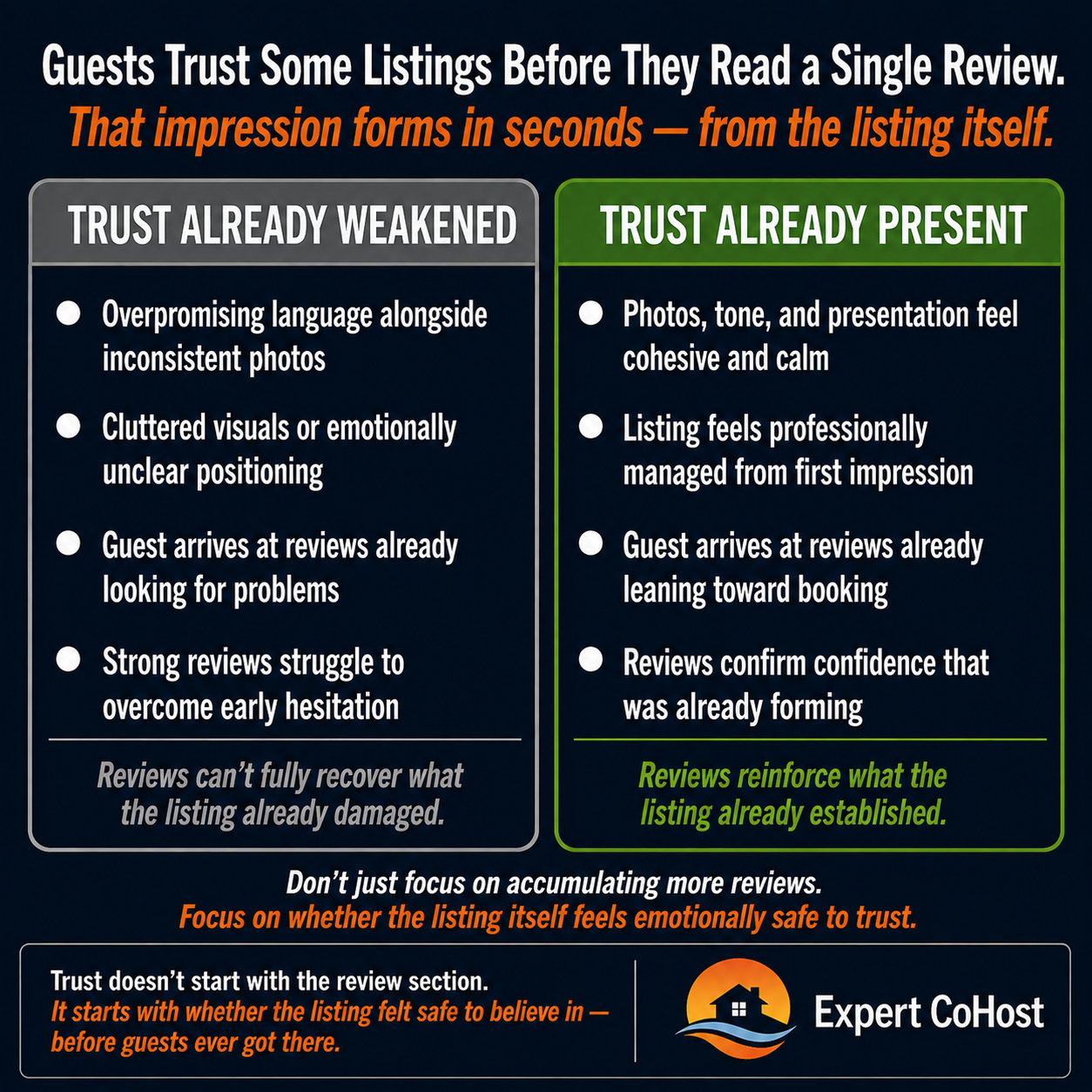
Interestingly, guests frequently use reviews to confirm emotional impressions they already formed earlier.
If the listing already feels trustworthy, reviews reinforce confidence.
If the listing already feels uncertain, guests may search reviews for reasons not to book.
That means emotional trust often begins before reviews ever enter the process.
The Real Shift
Most hosts think reviews are the foundation of booking confidence.
But in reality, many guests emotionally decide whether a listing feels trustworthy much earlier than that.
Because before guests read reviews…
they’re already quietly evaluating whether the listing itself feels emotionally safe to believe in.